
Spend a few minutes browsing real estate listings or flipping through home design content, and one style keeps resurfacing—mid-century modern. It’s bold without being loud, simple without feeling plain, and decades later, it still feels ahead of its time.
But what truly defines a mid-century modern home? And more importantly, why are today’s buyers actively searching for them?
If you’re buying, selling, or even considering building, understanding this architectural style can give you a serious advantage.
📜 Where It All Began: The Rise of Mid-Century Modern Design
Mid-century modern architecture didn’t appear randomly—it was a direct response to a changing world.
After World War II, the U.S. faced a housing boom. Families needed homes quickly, but they also wanted something better than traditional, closed-off designs. Architects responded with a new philosophy:
- Design should serve everyday life
- Spaces should feel open and connected
- Homes should coexist with nature—not fight it
Influenced by European modernism, especially the Bauhaus philosophy, designers focused on clean lines, practical layouts, and simplicity.
From the 1940s through the 1970s, this approach reshaped neighborhoods across the country—and its DNA still shows up in homes being built today.
🌄 First Impressions Matter: Exterior Design Characteristics
You can usually identify a mid-century modern home before you even step inside.
Instead of ornate trim or decorative flourishes, these homes prioritize structure and proportion.
What stands out immediately:
- Low, horizontal rooflines that emphasize simplicity
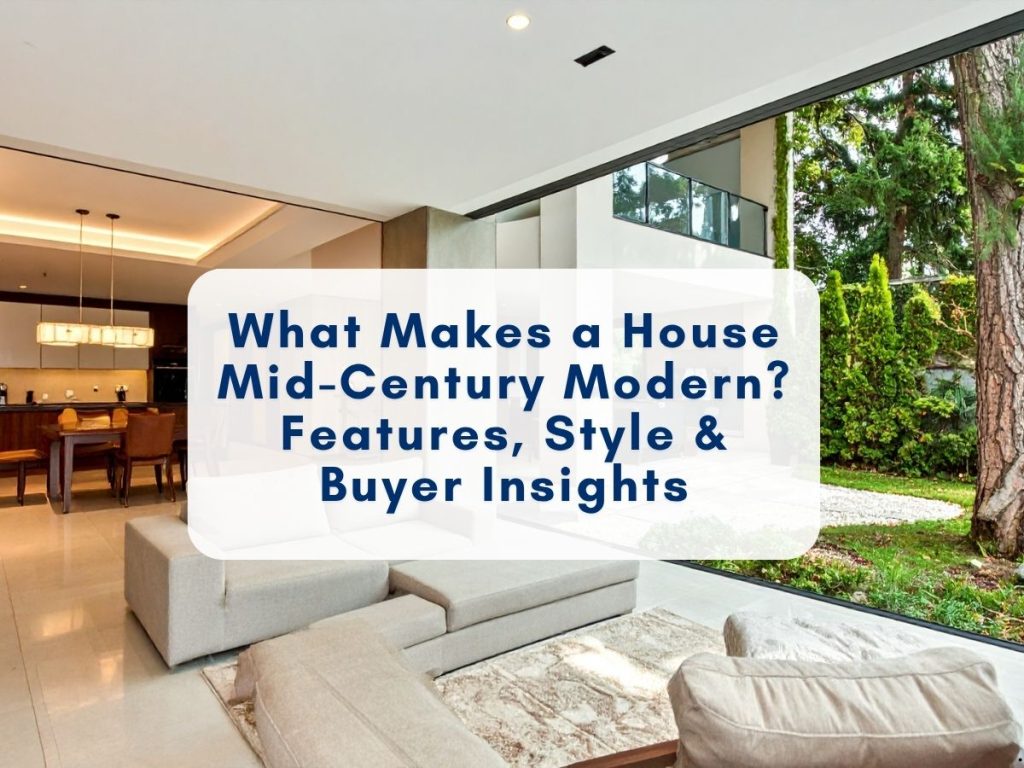
- Expansive windows that flood interiors with natural light
- Minimal exterior detailing—no excess, no clutter
- Materials like wood, stone, and glass used in harmony
- Designs that follow the natural slope and layout of the land
Many of these homes are single-story or ranch-style, making them especially appealing to buyers looking for long-term accessibility.
The overall effect is intentional: a home that feels grounded, open, and effortlessly modern.
🛋️ Inside the Home: Where Form Meets Function
Step through the front door, and the design philosophy becomes even clearer.
Mid-century modern interiors were built for living—not just for show.
Key interior traits include:
- Open-concept layouts that eliminate unnecessary walls
- Sunken living areas that create subtle separation without closing off space
- Clean, angular lines in everything from cabinetry to staircases
- A focus on natural textures paired with earthy tones
- Functional furniture that complements, rather than competes with, the architecture
These homes feel intentional. Every square foot serves a purpose, and nothing feels wasted.
🌟 Why This Style Still Wins Over Buyers
Even in today’s fast-moving real estate market, mid-century modern homes maintain a strong following—and for good reason.
Here’s what keeps buyers interested:
Timeless appeal
These homes don’t feel tied to a specific decade. Their simplicity keeps them relevant.
Natural light and outdoor access
Large windows and sliding doors create a constant connection to the outdoors.
Livable layouts
Open spaces adapt easily to modern lifestyles—whether that’s working from home or hosting gatherings.
One-of-a-kind character
In a market full of similar-looking homes, this style stands out immediately.
⚠️ What Buyers Should Know Before Purchasing
While the design is appealing, buyers should approach these homes with a clear understanding of potential trade-offs.
Common considerations:
- Older systems may need updating (electrical, plumbing, roofing)
- Large windows can impact energy efficiency if not upgraded
- Inventory can be limited depending on your location
- The style isn’t universally appealing, which can affect resale timing
That said, many buyers see these as opportunities—not drawbacks—especially when renovations can enhance both function and value.
🏘️ Positioning a Mid-Century Modern Home to Sell
If you own one of these homes, you’re sitting on something special—but presentation matters.
Strategic ways to market it:
- Showcase original architectural details whenever possible
- Use furniture that complements clean lines and open space
- Highlight natural light and outdoor connections
- Tell the story of the home’s design—not just its features
Buyers shopping for this style aren’t just purchasing a house—they’re buying into a lifestyle.
🎨 Love the Style? You Can Recreate It Anywhere
You don’t need a true mid-century modern home to enjoy the aesthetic.
Simple design choices can transform almost any property:
- Choose furniture with tapered legs and sleek profiles
- Stick to warm woods and muted, earthy colors
- Add geometric accents through décor
- Swap lighting for statement pendant or globe fixtures
Even subtle updates can create that signature mid-century feel.
🤔 Is This the Right Fit for You?
This style isn’t for everyone—but for the right buyer, it’s hard to beat.
You might love mid-century modern if you:
- Prefer clean, uncluttered spaces
- Enjoy natural light and outdoor living
- Appreciate architecture with personality
- Are open to updating an older home
For sellers, understanding this buyer mindset is key to attracting the right audience.
✅ Final Thoughts: A Style That Refuses to Fade
Mid-century modern homes aren’t just trending—they’ve proven their staying power.
They combine thoughtful design, everyday functionality, and a connection to nature that still resonates today.
Whether you’re buying your first home, preparing to sell, or considering building something unique, this style offers a compelling blend of form and function.
👉 If you’re curious about finding—or marketing—a mid-century modern home, let’s connect. I’ll help you navigate your options and make confident decisions every step of the way.
